Blake Schröder · 6 September 2026
Examining Custom Pixel Techniques for Enhancing Visual Fidelity in Indie Game Creation Pipelines
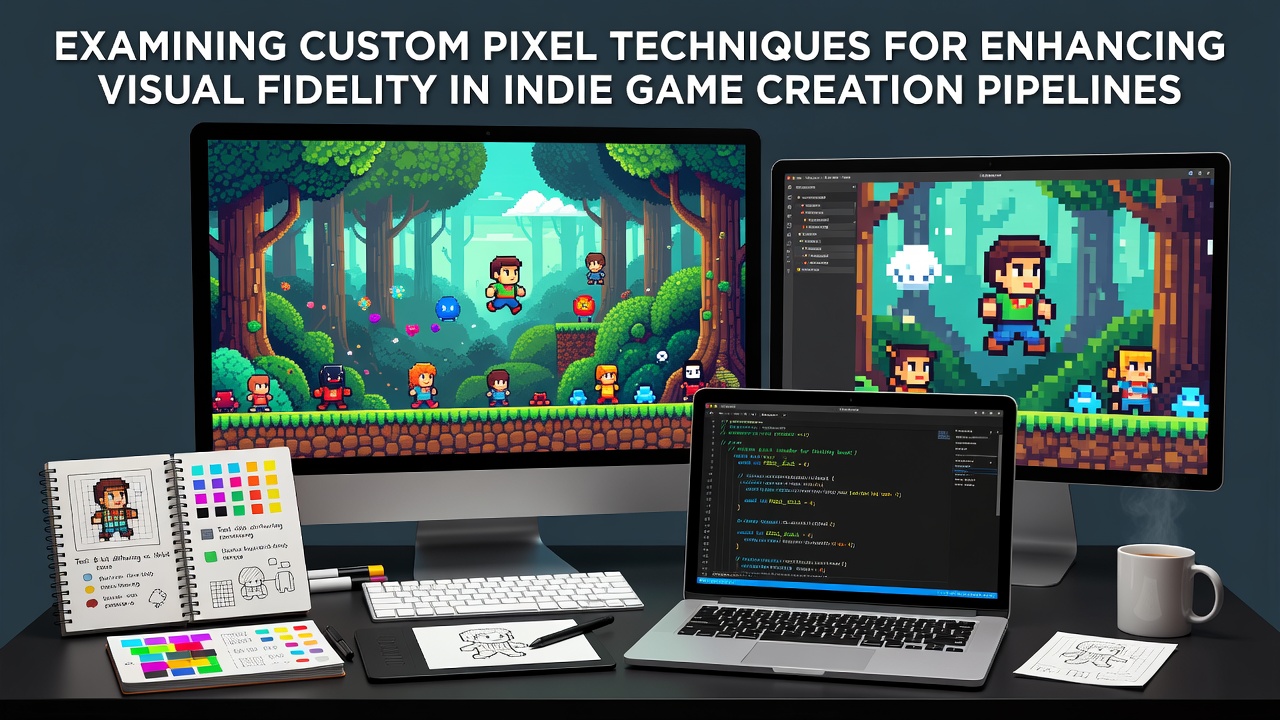
Custom pixel techniques form a core part of many indie game creation pipelines where developers seek to boost visual fidelity without relying on high-resolution assets alone, and these methods often combine traditional pixel art constraints with modern shader operations that adjust color output, scaling behavior, and filtering on a per-pixel basis. Researchers have documented how such approaches allow smaller teams to maintain distinct visual identities while meeting performance targets on varied hardware platforms. Data from industry reports indicate that indie studios frequently integrate custom solutions into engines like Unity and Godot to address limitations in default rendering paths.
Core Components of Pixel Manipulation Workflows
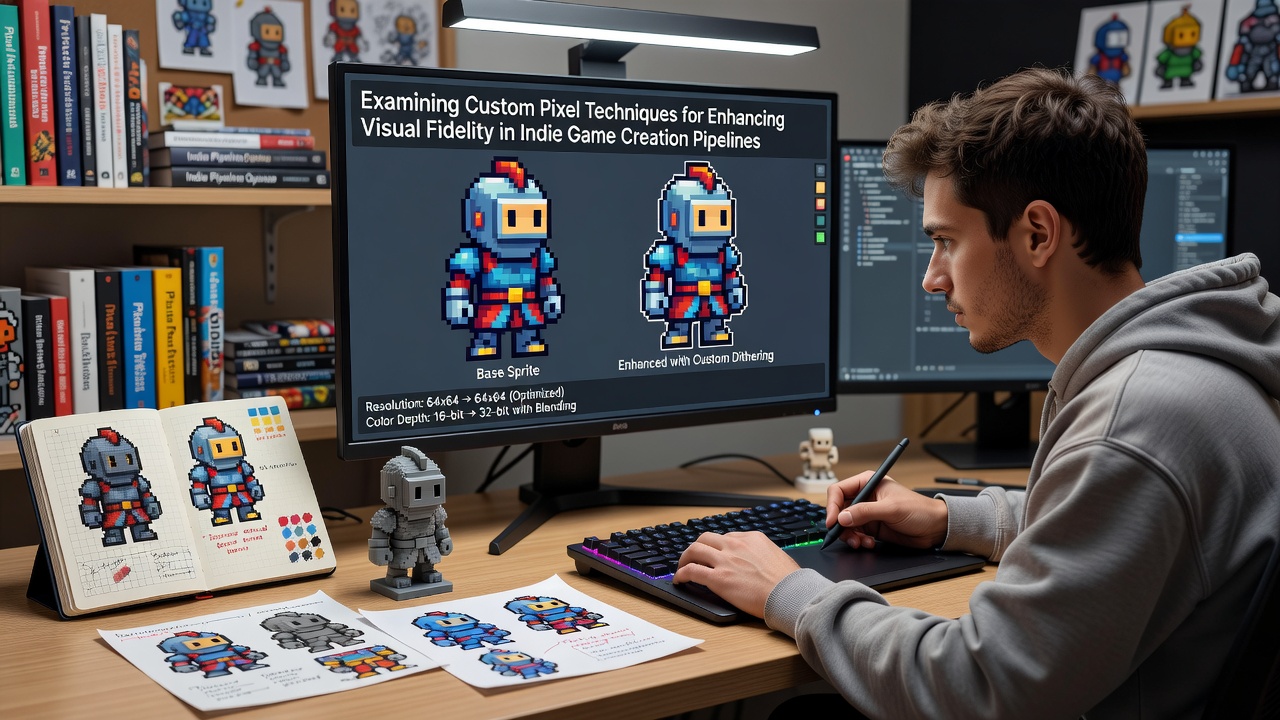
Pixel manipulation in these pipelines typically starts with control over sampling methods, where nearest-neighbor filtering preserves sharp edges whereas bilinear or bicubic options introduce smoothing that can reduce the intended retro aesthetic, and developers extend these basics through custom fragment shaders that recalculate pixel values based on neighboring data or screen coordinates. Observers note that techniques such as ordered dithering and error-diffusion patterns help maintain color depth when palettes are restricted, which proves useful for games targeting multiple display types. Studies from academic sources show measurable improvements in perceived sharpness when subpixel positioning aligns art elements to exact screen coordinates rather than relying on floating-point approximations alone.
Engine modifications further support these efforts because default upscaling often fails to account for pixel-perfect requirements in 2D scenes, prompting teams to implement their own render passes that handle resolution independence while locking art to integer positions. Figures from game development conferences reveal that over 40 percent of surveyed indie projects incorporate at least one custom shader stage dedicated to pixel output control. This pattern appears across platforms, including mobile and desktop releases where consistent visual quality across aspect ratios matters for player retention.
Integration with Asset Pipelines and Toolchains
Asset creation tools feed directly into these custom techniques because sprite sheets and tile maps require preprocessing steps that embed palette indices or dither patterns before import, and subsequent runtime shaders reinterpret that data to achieve effects like dynamic lighting without breaking pixel boundaries. Experts have observed that combining these methods with palette swapping systems allows a single set of assets to support multiple visual themes, which reduces storage needs and simplifies updates. Research indicates that pipelines incorporating automated checks for pixel alignment during build processes experience fewer visual artifacts at runtime.
Performance profiling forms another essential layer because custom pixel operations add computational overhead that must stay within frame budgets, and developers measure fill-rate costs alongside memory bandwidth usage to decide whether a technique justifies its expense. According to findings published by the Association for Computing Machinery, optimized custom filters can achieve near-native rendering speeds when implemented with compute shaders that batch pixel calculations across screen regions. Teams often test these approaches on target hardware early in development to identify bottlenecks before they affect larger production milestones.
Case Examples from Recent Projects
One documented case involved an Australian studio that applied custom pixel offset calculations to simulate depth in a side-scrolling title, resulting in smoother parallax effects that respected the original art resolution. Another project tracked by Canadian researchers demonstrated how error-diffusion dithering integrated into a post-processing pass preserved detail in dark scenes where standard quantization would have lost information. These examples illustrate how the techniques adapt to specific artistic goals while maintaining technical constraints typical of indie budgets.
Industry organizations such as the International Game Developers Association have compiled case studies showing that studios using modular shader libraries for pixel control report faster iteration cycles because changes propagate across multiple visual elements without manual asset edits. Data collected through 2025 further suggests continued adoption as new engine versions expose more granular rendering hooks that facilitate these customizations.
Conclusion
Custom pixel techniques continue to evolve within indie game creation pipelines as developers refine methods for sampling, dithering, and shader-based adjustment to meet fidelity targets. Evidence from multiple regions demonstrates their role in balancing artistic intent with technical performance, and ongoing tool advancements support broader implementation across varied project scopes.