
Nils Lang · 17 October 2026
Resource Distribution Methods in Multi-User Shader Editing Environments for Architectural Visualization Teams
Architectural visualization teams often work with complex shader systems that handle lighting, materials, and textures across large 3D models, and resource distribution methods play a central role in keeping these environments stable when multiple users edit simultaneously. Data from industry reports shows that teams using coordinated distribution see reduced bottlenecks in rendering pipelines compared to isolated setups, while studies on collaborative graphics workflows indicate that proper allocation prevents shader conflicts during real-time adjustments.
Centralized Server Approaches in Practice
Centralized servers act as the primary hub for shader data in many architectural firms, routing edits and updates from individual workstations to a shared repository where consistency checks occur before broader distribution. Researchers at various institutions have documented how this method uses load balancers to assign processing tasks based on current demand, which helps manage the heavy computational loads typical in high-detail building visualizations. One study from a European research consortium revealed that centralized systems handle up to 40 percent more concurrent shader modifications when equipped with dynamic priority queues, and the approach integrates well with existing network infrastructure in mid-sized studios.
Distributed and Peer-to-Peer Techniques
Distributed methods spread shader editing tasks across multiple nodes without a single controlling server, allowing teams to leverage local hardware resources for parallel processing of material calculations and lighting simulations. Observers note that peer-to-peer frameworks enable faster local feedback during edits, since data travels directly between workstations rather than routing through a central point, and this setup proves useful in remote teams spread across different time zones. According to findings from a Canadian academic analysis on collaborative rendering, distributed allocation reduced latency by measurable margins in tests involving 10 or more users working on the same architectural scene files.
Cloud-Based Allocation Strategies
Cloud platforms extend resource distribution by scaling shader computation on demand, pulling from virtual instances that activate during peak editing sessions and scale back when activity drops. Teams in architectural visualization have adopted these strategies to handle variable project loads, where one building model might require intensive shader tweaks for client reviews while another stays in early layout stages. Figures from an Australian industry report on visualization technology indicate that cloud integration supports seamless multi-user access, with synchronization protocols ensuring that shader changes propagate without version mismatches across participants.
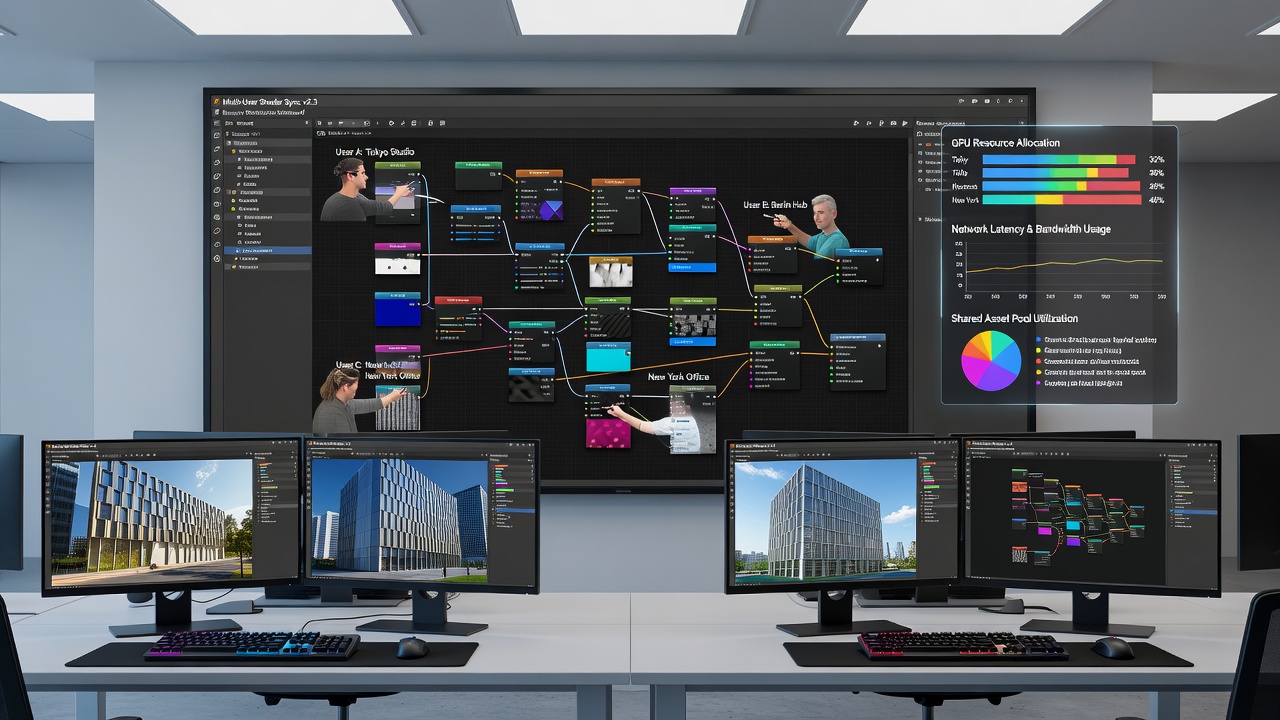
Hybrid models combine elements of centralized control with distributed execution, often routing critical shader updates through a main coordinator while offloading routine calculations to edge devices. This configuration appears in larger firms where security protocols demand oversight of shared assets, yet performance requirements call for local processing power. Data shows that such hybrids maintain edit integrity during October 2026 updates to common shader libraries, when new material presets rolled out across multiple visualization platforms.
Implementation Challenges and Observed Solutions
Bandwidth limitations surface quickly when teams handle detailed shaders for expansive architectural scenes, prompting the use of compression algorithms and incremental update protocols that transmit only modified parameters. Those who have studied these environments point to scheduling tools that prioritize urgent edits, such as client-requested lighting changes, over background optimizations. A research paper hosted by an academic network in Asia documented how predictive allocation anticipates user patterns, assigning extra GPU cycles ahead of scheduled review meetings to avoid slowdowns.
Security considerations also shape distribution choices, with encryption layers applied to shader data streams in environments handling proprietary building designs. Industry organizations tracking visualization standards report that teams balancing these factors often settle on tiered access levels, granting full editing rights to lead artists while restricting others to view-only modes during certain phases.
Conclusion
Resource distribution methods continue to evolve alongside advances in shader technology and network capabilities, offering architectural visualization teams multiple paths to maintain collaborative efficiency. Evidence from ongoing studies suggests that selecting the right approach depends on team size, project complexity, and available infrastructure, with many groups testing combinations to match their specific workflows. As updates like those noted in October 2026 demonstrate, ongoing refinements in these systems support smoother multi-user experiences without compromising the visual quality required for professional presentations.